See the whole network. Inspect it without shutting it down.
Catch incidents before they become closures, and assess bridges, pavement and runways without taking a lane, platform or apron out of service. All from the cameras and network you already run.
Continuous monitoring across the network. Automated inspections on the structures that carry it.
Prism reads the cameras already installed across stations, terminals, kerbsides, and traffic corridors. Orb inspects the bridges, pavement, and runways a crew can otherwise only reach by closing them.
Where computer vision works across road, rail, and air
Rail and stations
01
Platform crowding and capacity
02
Commuter counts at entry and exit gates
03
Workers in the safety corridor during possessions
04
Vehicles and people at level crossings
Terminals and public areas
05
Passenger counts and movement through the terminal
06
Queue length and wait time
07
Crowd density and dwell in concourses and waiting areas
08
People using mobility aids, and the routes they take
09
Missing PPE in live work zones
Kerbside and parking
10
Pick-up and drop-off events
11
Double parking and kerbside offences
12
Parking utilisation and length of stay
13
Vehicle dwell time in loading zones
Roads and corridors
14
Vehicle counting and classification
15
Traffic flow, queuing, and congestion
16
Corridor flow rates
17
Crosswalk utilisation and pedestrian signal timing
18
Bus lane and bicycle lane utilisation
19
Near misses and collisions between vehicles and pedestrians
20
Potholes, graffiti, and damaged road assets
21
Pavement condition across the road network
Perimeter and access
22
Perimeter breaches and intrusion
23
Fence and gate damage
24
Unidentified vehicles in controlled zones
Bridges and tunnels
25
Structural defects on spans and understructure
26
Change between inspection cycles
Runways and aprons
27
Foreign object debris on runways, taxiways, and aprons
Intrusion and incursion events, near misses and collisions, and the people and vehicle movements around them are detected as they happen and routed to the security and operations teams that already handle them, with the visual evidence attached and timestamped.
Automated Flight & Capture
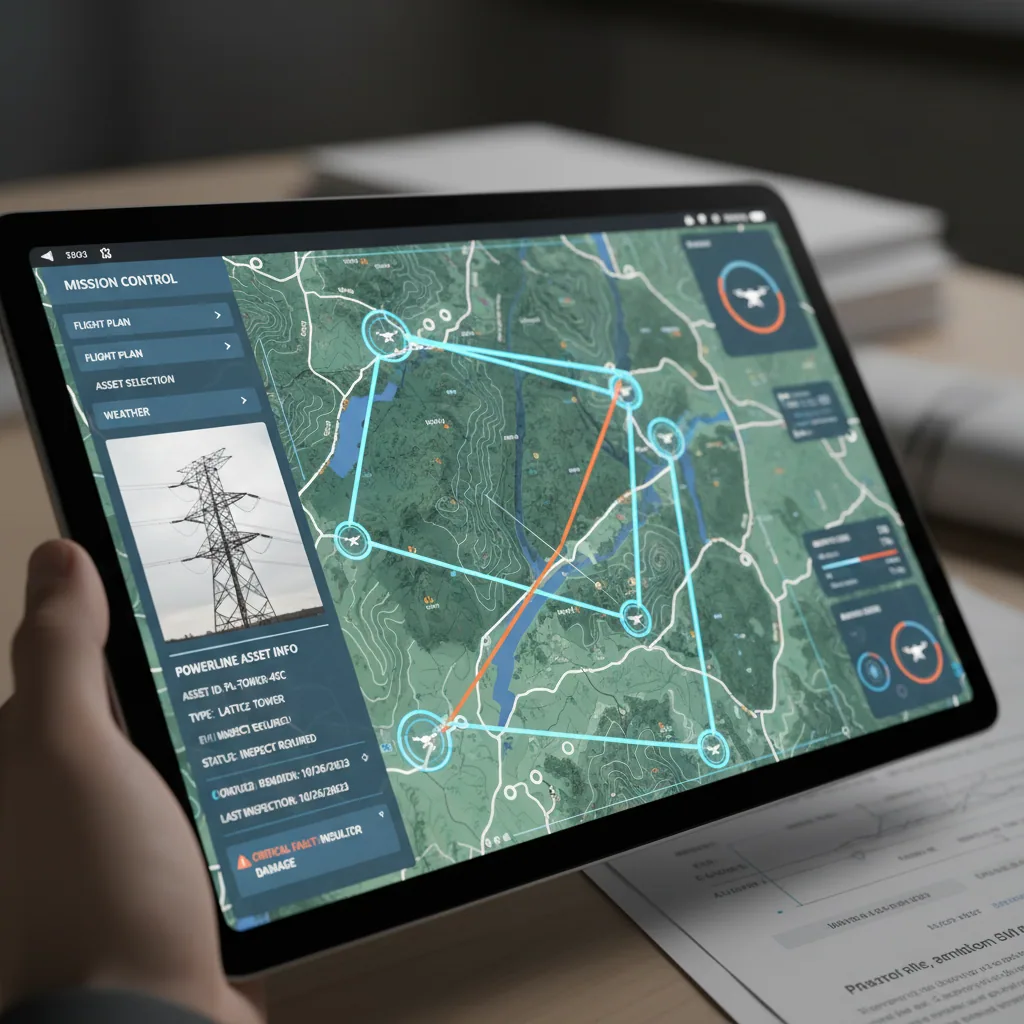
AutoFly, Unleash Live's ground control station software, flies each mission to the same standard, capturing runway surfaces, aprons, spans, and pavement at the same angle and altitude. Media syncs from the field, tagged to its asset and ready to analyze.
Inspection Planning
Define your structures, corridor segments, and runways, set capture profiles per asset class, and schedule once. Each mission inherits the same standard, giving you one consistent record across sites and inspection cycles.
Perimeter breaches and traffic incidents are measured in seconds, not inspection cycles. Processing at the edge keeps detection running when the link to site does not, and results sync when connectivity returns.
Asset Passport
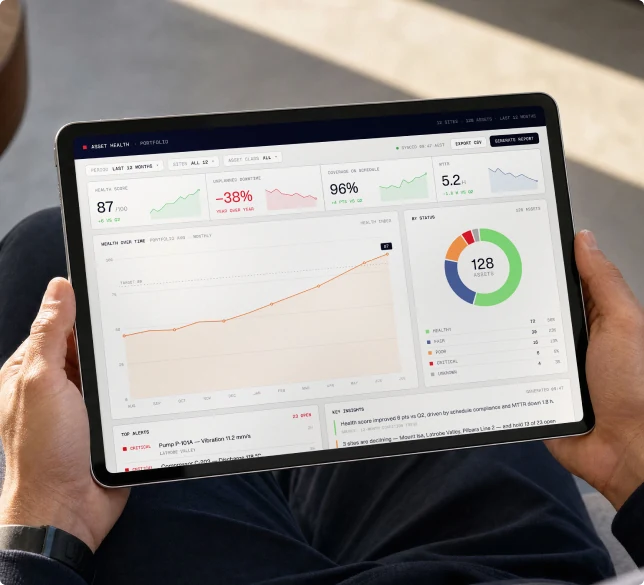
One record per asset, holding its full history. Each inspection, detection, and action writes back to it, so you can see how a runway, span, or corridor is trending across inspection cycles, and what's actually getting worse, not just what's most recent.
Data Sovereignty & Governance
Your visual data stays governed and under your control, with role-based access, encryption in transit and at rest, and an audit trail behind each detection. Deploy to cloud, on-premise, or hybrid.
Enterprise Integrations
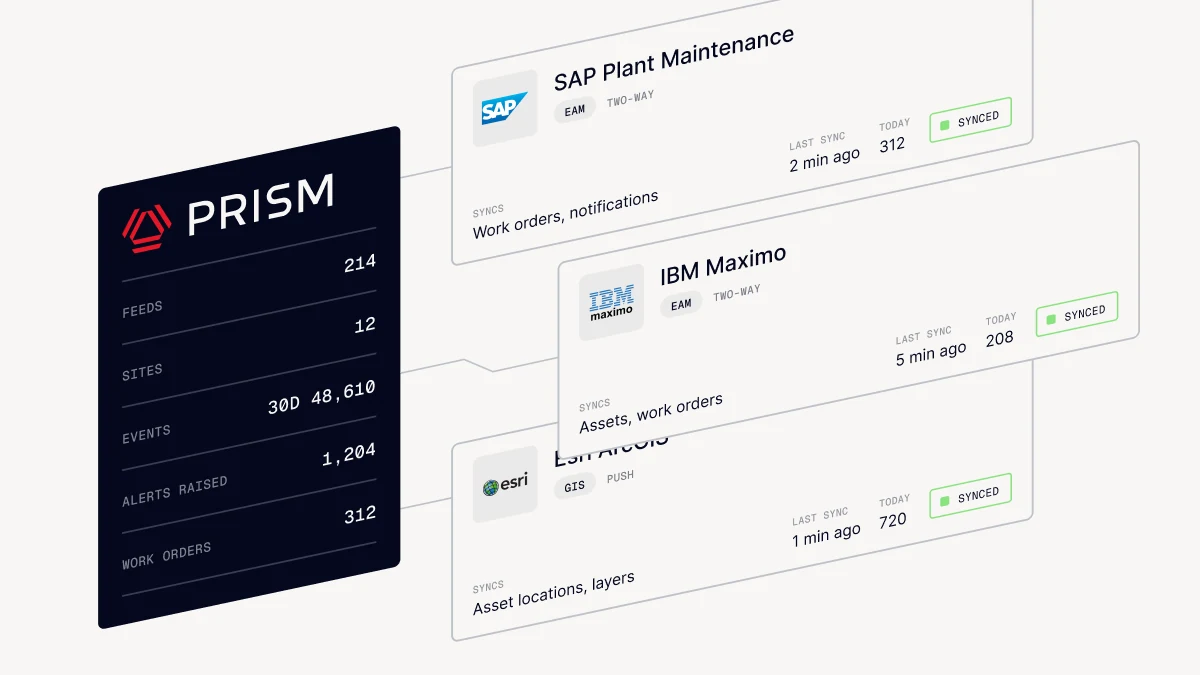
Events and findings flow straight into your security operations centre, traffic management, and asset management systems as alerts and work orders, with an API for everything else.
■Use cases
Ridership data from cameras already on the network
A metro rail operator lost its ticketing data when it opened the gates, and with it the view of how full the network was. Its existing cameras were connected through the video management system already in place, giving timestamped ridership across the network without new hardware.
50
Cameras connected
20
Stations covered
40%
Actual ridership, against a 25% estimate
Platform patronage, checked against the ticketing system
A state transport authority had Opal card data and no view of what happened on the platform. Light rail platform cameras were read for patronage and platform behaviour, and the result tracked the ticketing trend closely enough to be used for live capacity monitoring.
15%
Agreement with ticketing data trends
Kerbside planning without the manual counts
A city wanted better pedestrian and vehicle data for curbside planning and was collecting it by hand. Its existing traffic cameras were processed in real time instead, across parking utilisation, pick-up and drop-off events, and lane use.
Will this work with the cameras and drones we already have?
Yes. Prism is camera-agnostic and connects to the fixed CCTV, PTZ, and IP camera networks already installed across terminals, perimeters, and corridors, with no hardware replacement required. Orb works with your existing drone fleet and pilots, or with a drone program we help you stand up.
Our detection windows are measured in seconds. Can this run fast enough?
Yes. Deployment can be cloud, edge, or hybrid edge and cloud, confirmed during implementation against your security and data residency requirements. Latency-sensitive detection, perimeter breaches and traffic incidents among them, runs at the edge, so it continues when the link to site does not and results sync when connectivity returns.
Do we have to close a lane or a runway to inspect it?
No. Orb captures pavement, spans, runway surfaces, and aprons from the air, on a schedule, so condition is recorded without the closure a walked inspection needs. The same capture standard applies each cycle, which is what makes two inspections comparable.
How do we follow an asset's condition over time?
Through Asset Passport, one record per asset that holds its full history. Each inspection, detection, and action writes back to it, whether it came from an Orb flight over a runway or a Prism camera on the perimeter, so a condition can be followed from the first finding to the repair, across inspection cycles.
What happens when we need a detection that doesn't exist yet?
We work with you on new detection models that are built, trained, and deployed as AI Apps through Mobius, Unleash Live's development environment for building AI Apps. You can build against your own assets and event types, or bring existing models and run them alongside.
What does a first deployment look like, and how long before we see something?
A first deployment is scoped to one terminal, one airfield, or one corridor segment, not the whole network. You prove the result where it's measurable, then expand across sites and asset types from the same deployment.
Who reviews the findings? Does this add people to the team?
No. Events and detections route to the security, operations, and maintenance teams and systems that already handle them, so the work goes to the people who act on it rather than to someone monitoring screens.
What enterprise systems does this integrate with?
Events and findings connect into security operations centres, traffic management systems, and asset management and maintenance scheduling platforms, with additional integration pathways available via API.
How does this clear our IT and cyber review?
Unleash Live is ISO 27001 and GCC certified. Role-based access control, encryption at rest and in transit, and full audit logging, with compliance documentation available on request. Structured inspection records and audit logs compile automatically, ready for regulatory and safety reporting.
See it across your network.
Turn the cameras and inspection flights already in your program into events and findings your operations and maintenance teams act on, across the whole network.