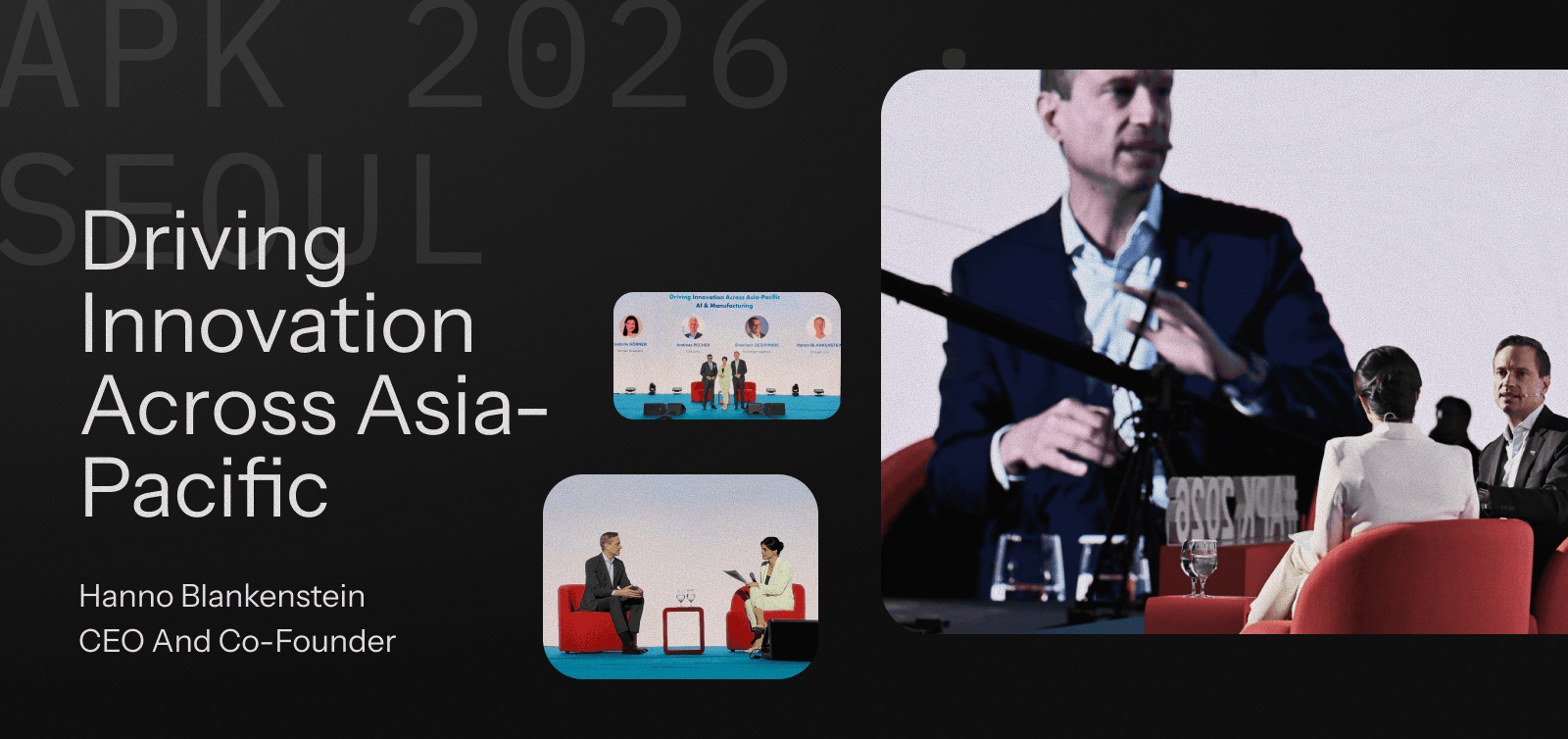
Hanno Blankenstein on industrial AI in Asia Pacific: why precision beats pilots, why a world model for industry is still missing, and where German engineering fits.
- ai
- computer-vision
- operations
- mining
- oil-gas
- drones
- partners
- integration
What Asia Pacific is teaching us about industrial AI, and why German precision is the missing piece
By Hanno Blankenstein, Global CEO & Co-Founder, Unleash Live
I was invited to the Asia-Pacific Conference of German Business to share the perspective of a founder who has built a company in this region. Unleash Live turned ten this year. We are headquartered in Australia, with offices in Los Angeles and clients across Asia, Europe and the Americas.
What we actually do
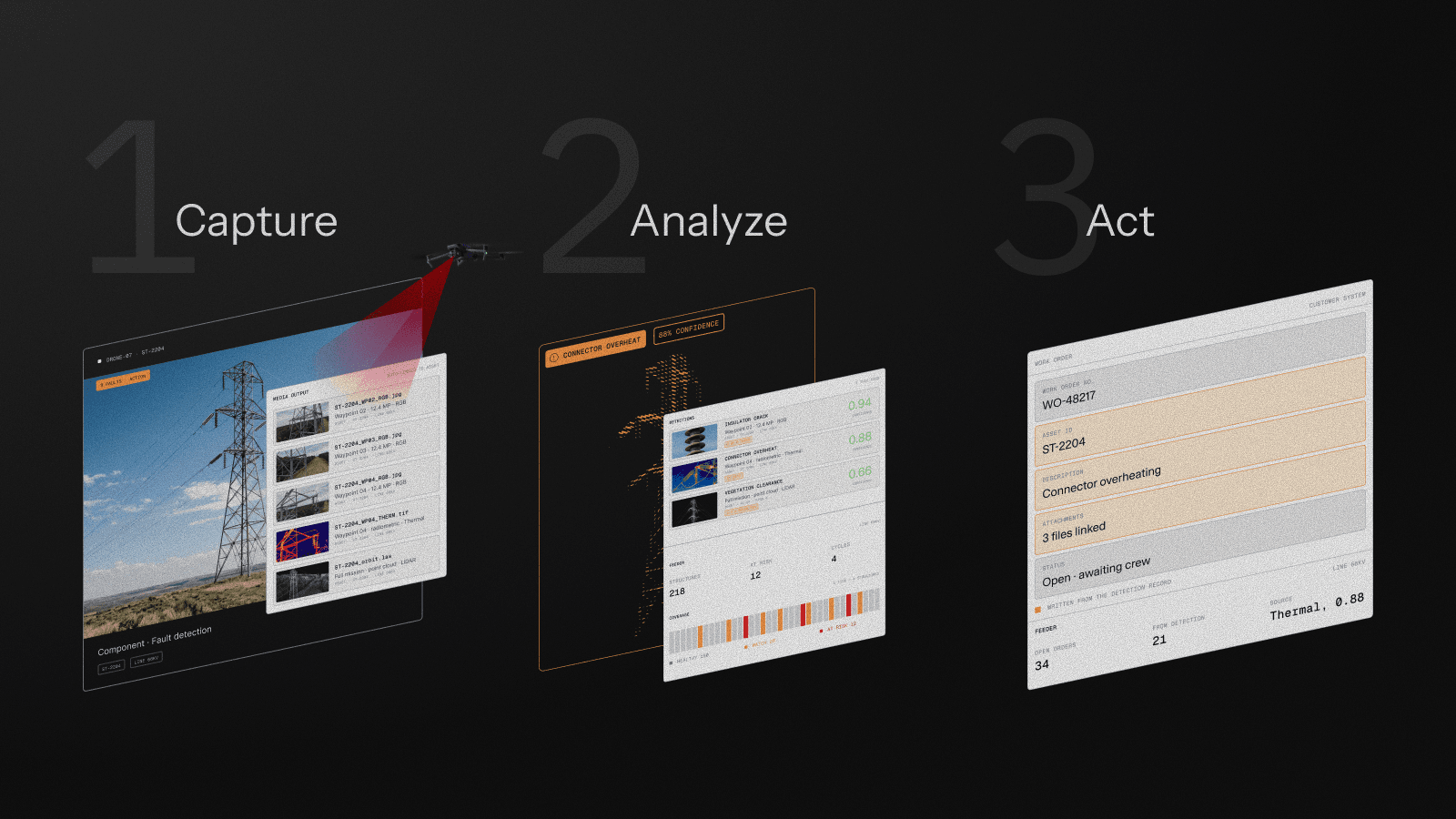
Unleash Live is an enterprise computer vision platform for critical infrastructure and asset-intensive operators. In practice that means we connect the robots and drones in the field, take their data, run computer vision analytics across very large data sets, and bring the results back into the systems of record our customers already run, such as SAP, Snowflake, Siemens and Oracle. With real time AI inference, we also send actions straight back to industrial machinery including robotics.
That is extremely difficult to do in practice. Large infrastructure often sits in remote places: deserts, rural land, forests and fields, far from any city and far from connectivity. Traditionally the operators of these assets had no real-time data at all. It was paper-based, or it did not exist. Where sensors had been added, the data was siloed: one machine, one piece of the operation, nothing joined up.
Ten years ago the emergence of cloud, network connectivity and satellite broadband opened a new opportunity, and that is what started Unleash Live in Australia. The need was already there: the build-out of energy infrastructure, and a great deal of ageing infrastructure in refineries, ports and transport systems causing risks for workers and challenges to productivity. We wanted better data so those assets could be operated more safely and more productively.
Fast-forward a decade and every one of those underlying technologies now exists and is accelerating our business. Camera and sensor technology that did not exist ten years ago now lets you see things that are simply incredible, in thermal, visible light and hyperspectral. Couple that with other sensors, secure data transmission and secure cloud operations, then push compute back to the edge, into the robots and drones, and asset operators gain a clarity about their operations they have never had before.
Where the value is: precision, not pilots
There are two things that matter. The first is clarity on the productivity and the risk of your operations, anywhere in the world, without failure. A pilot project in a lab is not good enough. We are talking about millions of transmission poles, thousands of miles of oil and gas pipelines, refineries and warehouses, and port infrastructure where every hour of productivity counts. It is a harsh environment in which to deploy digital technology, but it is essential if you want to operate safely and productively.
The second is where the value sits: in the specific, precise use case that secures the infrastructure and measures the productivity of one particular element in the workflow. That is impossible today with a traditional frontier LLM. We are at the very beginning of getting this precision right for industrial applications.
It helps to remember where industry comes from. In the 1970s Siemens began deploying PLC protocols, a deterministic way of running machinery, and became the world leader in industrial control. What changes now is that a probabilistic AI model sits on top of that deterministic base and runs autonomous processes. That is where we come in. The opportunity is to move the entire business model of how machinery is run from the 1970s into an AI-driven, autonomous workflow with a new operating system, which we call invisible operational clarity.
How you get there
First, accept the reality of where industry and manufacturing are today in terms of data generation, transfer and analysis. Frankly, most of it still runs on PLCs. Accept that, then add inference, applications and connectivity on top of the stack. Do not try to replace it. Complementary sensors and sheer quantity of data create the new model that enables autonomous processes.
Roland Busch, CEO of Siemens, said something in passing that was extremely important: Nvidia and Siemens want to build a world model for industrial AI to operate assets completely differently. That model does not exist yet. The models we have from Anthropic and others are built on the internet; they scrape what is there and get better at writing legal documents, design interfaces or coding. A world model for industrial AI is still to be built, and at Unleash Live we hold the precision capture and analysis together with the data sets that are the foundation for it: digital scenes of robots, drones and sensors working in real industrial environments.
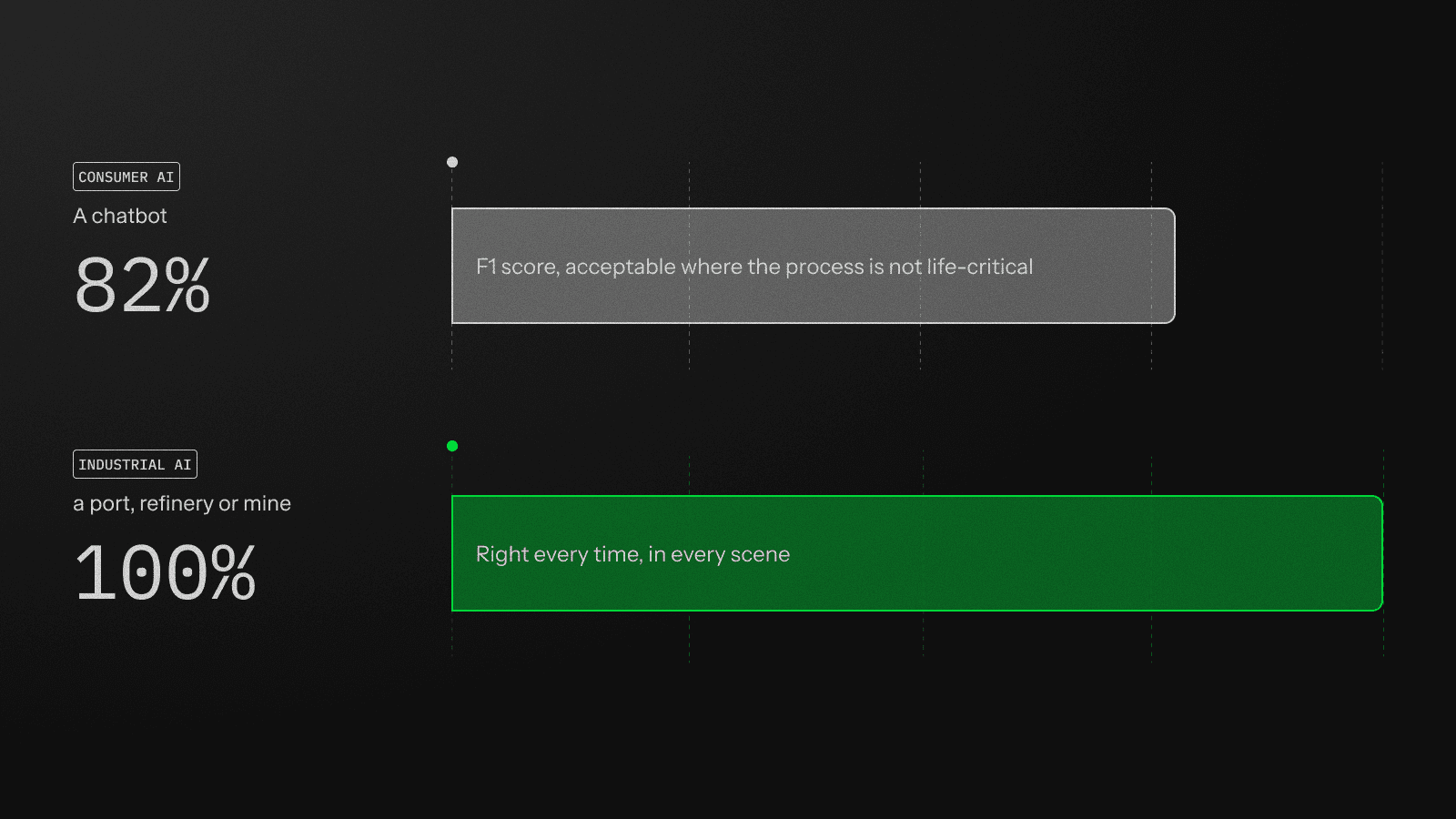
An 82 percent F1 score is acceptable for a chatbot. In a port, a refinery or a mine, we need to be right 100 percent of the time, every time, in every scene.
That is the difference between consumer AI and industrial AI. We accept that a frontier model gets it right most of the time because the processes are not life-critical. In industrial AI they are. Getting from 82 percent to 100 percent is precisely what Germany and Korea are good at. But it requires a complete shift in mindset about the data we generate for these world models and how we deploy it back into the robots in real time to perform the task, to take action.
Speed is the lesson
Industry is moving extremely fast and is demanding solutions to real productivity constraints. Costs are accelerating across supply chains. Workers are increasingly exposed to dangerous situations on assets where they should not be. The build-out of mine sites, solar farms, wind and oil and gas infrastructure, substations and transmission lines demands automation, because we simply do not have enough people to do the work.
So we need to be fast in building up the data set, and the way to do that is to have no hesitation about partnering with the best robot and sensor companies and collecting data at scale. Then two things follow. Training and iteration need large amounts of compute. But inference, the actual running of actions, has to be pushed back into the brains of the robots and drones. That edge-compute problem is unsolved, even by Nvidia, and it is another genuine opportunity for German manufacturing and chip innovation.
Why Asia Pacific
I live in Australia, and Asia is a great playground with guardrails for everything I have just described. It has large-scale infrastructure and the freedom to test and integrate with partners. We partner with Siemens in Asia on digital automation and connecting to existing machinery. And this is the great thing about the region: it is a melting pot of European and Asian companies. We are very open to partnering with what I believe are phenomenal Japanese, Chinese and Taiwanese sensor, robotics and chip companies; DJI is probably the best sensor and robot company in the world, and it operates at scale.
What fascinates me is bringing that technology together and landing it with mining companies in the Pilbara in WA that are in genuine need of productivity improvement.
That does not make it easy. You have to think about the full stack, and it is extremely complex. You cannot just be a software company with an AI model and expect to solve industrial AI. But in Asia you can put the puzzle pieces together. You have the freedom to do it without facing every obstacle you meet in Europe, where each layer of the stack, from application to data security to physically deploying a robot on site, carries its own regulatory complexity. None of those rules is bad in itself. Together they make the whole thing very hard to pull off.
Excellence without hesitation
Get out there, in the dirty mine site, in the port, in the hardcore industrial environment. That is where the next famous startup will be built. It is not behind a computer.
What I loved about Germany translates extremely well to Asia. It is taking excellence in manufacturing and engineering into a market that has no hesitation. Germany is hesitant in many things; we overthink, we talk about it. Asia does not.
In my company I always say: provide excellence without hesitation. The excellence is German precision, taking AI to 100 percent. The lack of hesitation is what Asia does better than anyone.
That opportunity is right here, right now, and Silicon Valley is not going to solve it for us. Excellence plus trust is what we provide, and it is what I would recommend to anyone building in this region.
If you want to walk through how this maps to your own assets and operations, request a technical briefing.
Hanno Blankenstein is Global CEO and Co-Founder of Unleash Live, the enterprise industrial computer vision company that turns visual data into operational intelligence for critical infrastructure. Unleash Live was recently named Most Innovative Company in Australia in Energy and Resources.

