![Ten years of Unleash Live, with the team and guests. [alt="Collage of Hanno Blankenstein speaking and guests at the 10th anniversary event"]](/media/imported/blog/unleash-live-blog-feature-10th-anniversary-1-31d044.png)
Hanno Blankenstein reflects on ten years of Unleash Live, the shift from manual inspection to continuous visual intelligence, and what comes next.
- ai
- computer-vision
- monitoring
- inspection
By Hanno Blankenstein, Co-founder and CEO
Ten years ago, I set out to solve a problem manual inspection couldn't: catching infrastructure risk before it becomes a failure. I started in Sydney with a small team and a simple observation: operators responsible for some of the most critical infrastructure in the world were still relying on people walking sites, checking clipboards, and hoping nothing had changed since the last visit. That gap in how operators managed risk across their assets is what I built Unleash Live to close.
That idea is now a global team of computer vision engineers, AI specialists, and domain experts, working with Tier 1 infrastructure operators across Utilities, Mining, Oil & Gas, and Transport in Australia and North America. We chose a small number of industries deliberately, the ones where the cost of missing a problem is highest, and built deep expertise in each one.
Looking back over these ten years, it's humbling to see how far we've come in such a short period of time.
Two Ways to See What's Happening on the Ground
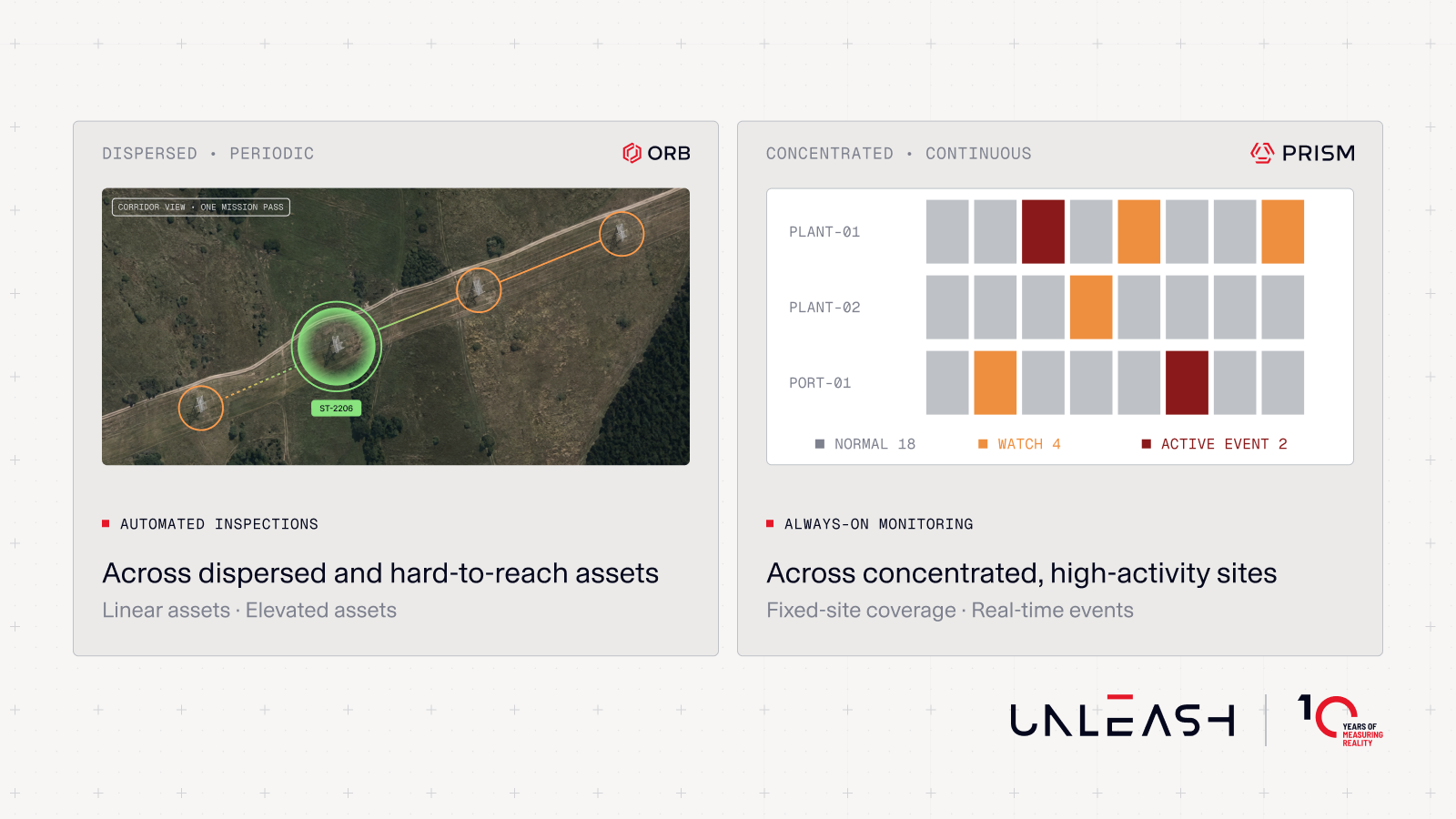
Along the way, we built two different ways to give operators that visibility, because the problem isn't the same everywhere.
Some assets are spread out and hard to reach: distributed infrastructure, linear networks, elevated sites that only need checking periodically. Getting a person out to every one of them, on a fixed schedule, at a consistent standard, is expensive and slow. So we built a way to run that inspection automatically, on a schedule set by actual risk.
Other sites are the opposite problem: concentrated, high-activity locations where something can go wrong at any moment. There, waiting for a scheduled inspection isn't good enough. We built a way to watch those sites continuously, using the camera infrastructure operators already have, so risks surface the instant they appear.
Any asset. Any scale. Anywhere. That's the standard we're building toward with our clients.
The Impact, Ten Years In
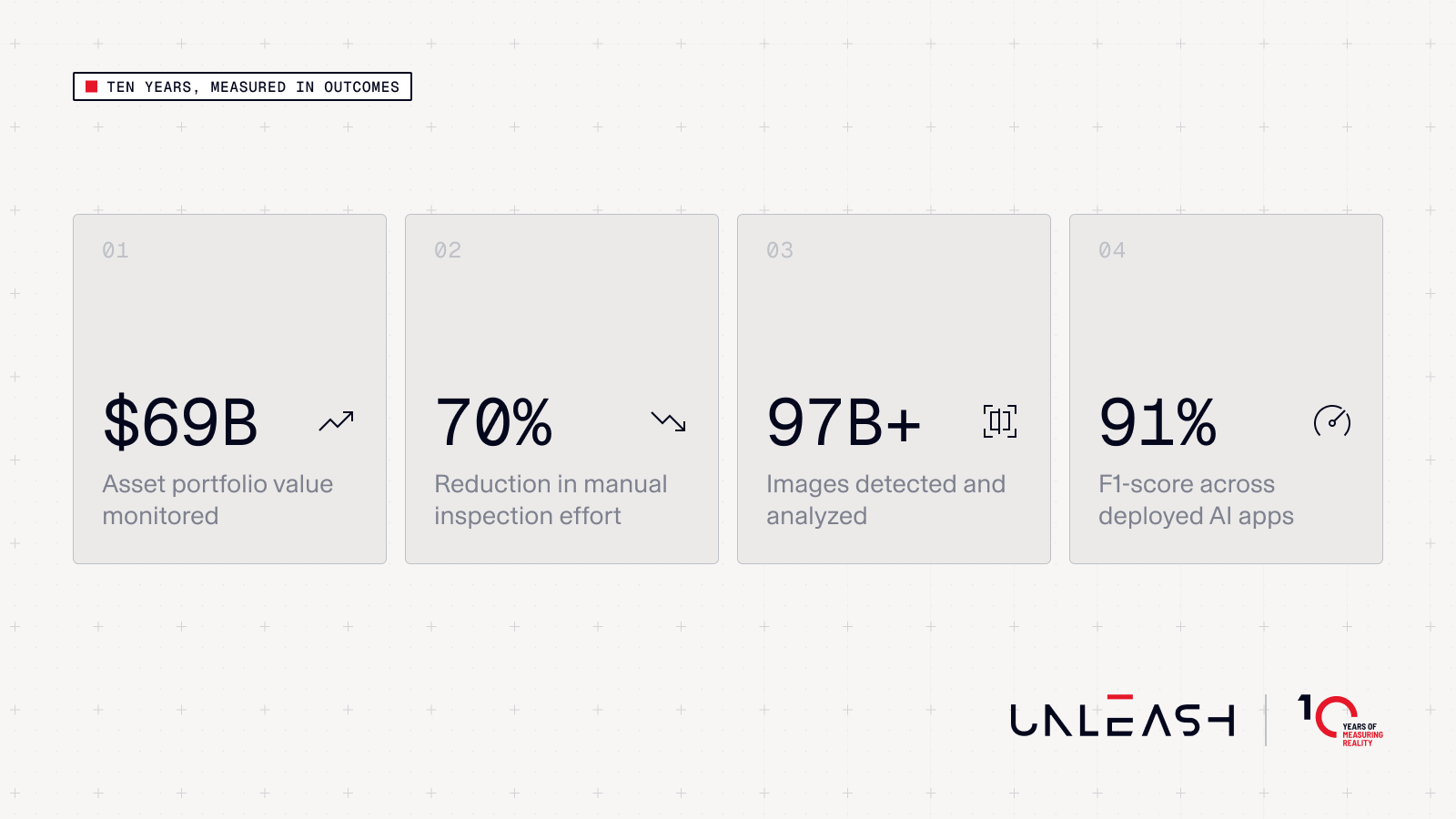
$69B in asset portfolio value monitored. A 70 percent reduction in manual inspection effort. 97 billion+ images detected and analyzed. A 91 percent detected F1-score across our deployed AI Apps.
Those numbers are how I hold myself and the team accountable. Each one represents something concrete: less time a field crew spends walking a site that could be monitored automatically, more of the world's critical infrastructure visible at a scale no manual process could reach, and a detection system that earns trust under real operating conditions.
What I've Learned Building This
Technology moved fast over the last ten years, and it will keep moving fast. What actually took the work was earning the trust of operators running assets where a mistake has real consequences: safety consequences, regulatory consequences, financial consequences. That trust gets earned one deployment at a time, by showing up in the field and being right, repeatedly, under real operating conditions.
That's shaped how I think about the next ten years as much as any technology roadmap has.
What I Think Comes Next
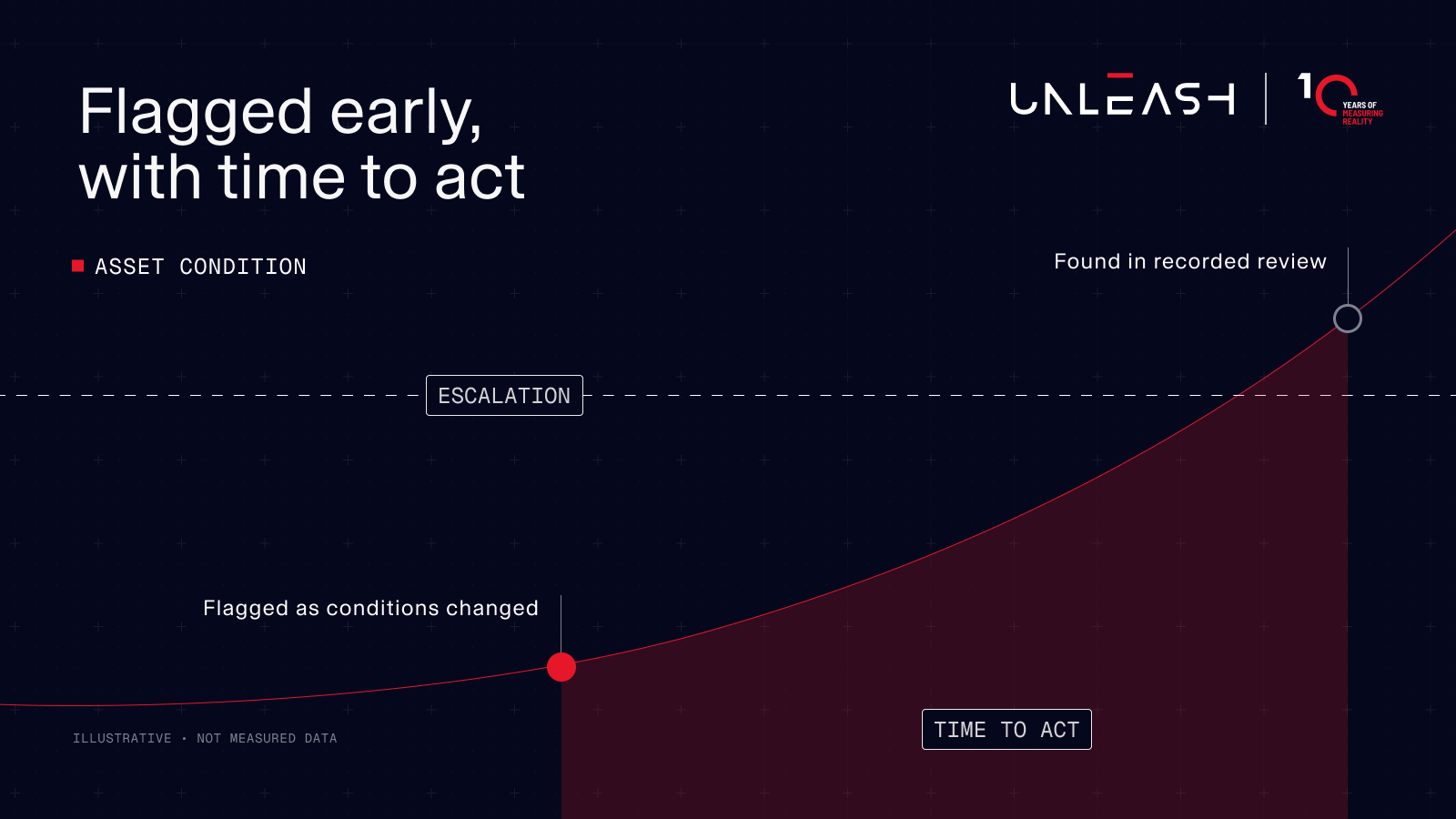
Visual intelligence is moving beyond recorded video. The next phase is continuous, spatial, and automated insight that responds as conditions change, giving operators the time to act before an issue escalates.
That's where the market is heading too. Infrastructure operators are moving from experimenting with computer vision use case by use case toward standardizing it across their assets, sites, and capture methods. Our next decade is built around helping them make that move, backed by deployment scale and evidence.
Ten years in, we're still building toward that standard, one deployment at a time.
Request a technical briefing

