![Two days of conversations at the Unleash Live stand, including one on camera with Hanno Blankenstein. [alt="Hanno Blankenstein interviewed on camera at the Unleash Live stand, with team photographs and an interview card"]](/media/imported/blog/blog-feature-mainstream26-e96fe6.png)
Hanno Blankenstein reflects on MAINSTREAM 2026 conversations about AI, computer vision, engineering retirements, workflow automation and operational asset management.
- ai
- inspection
- computer-vision
- drones
- utilities
- transmission
- monitoring
- safety
- mining
- oil-gas
- operations
By Hanno Blankenstein, CEO & Co-founder
I spent two days in Melbourne at MAINSTREAM this month with our Orb and Prism teams on the floor. We spent our time speaking with asset managers, engineers and operations teams on how to turn AI and computer vision trials, POCs and pilots into daily operations.
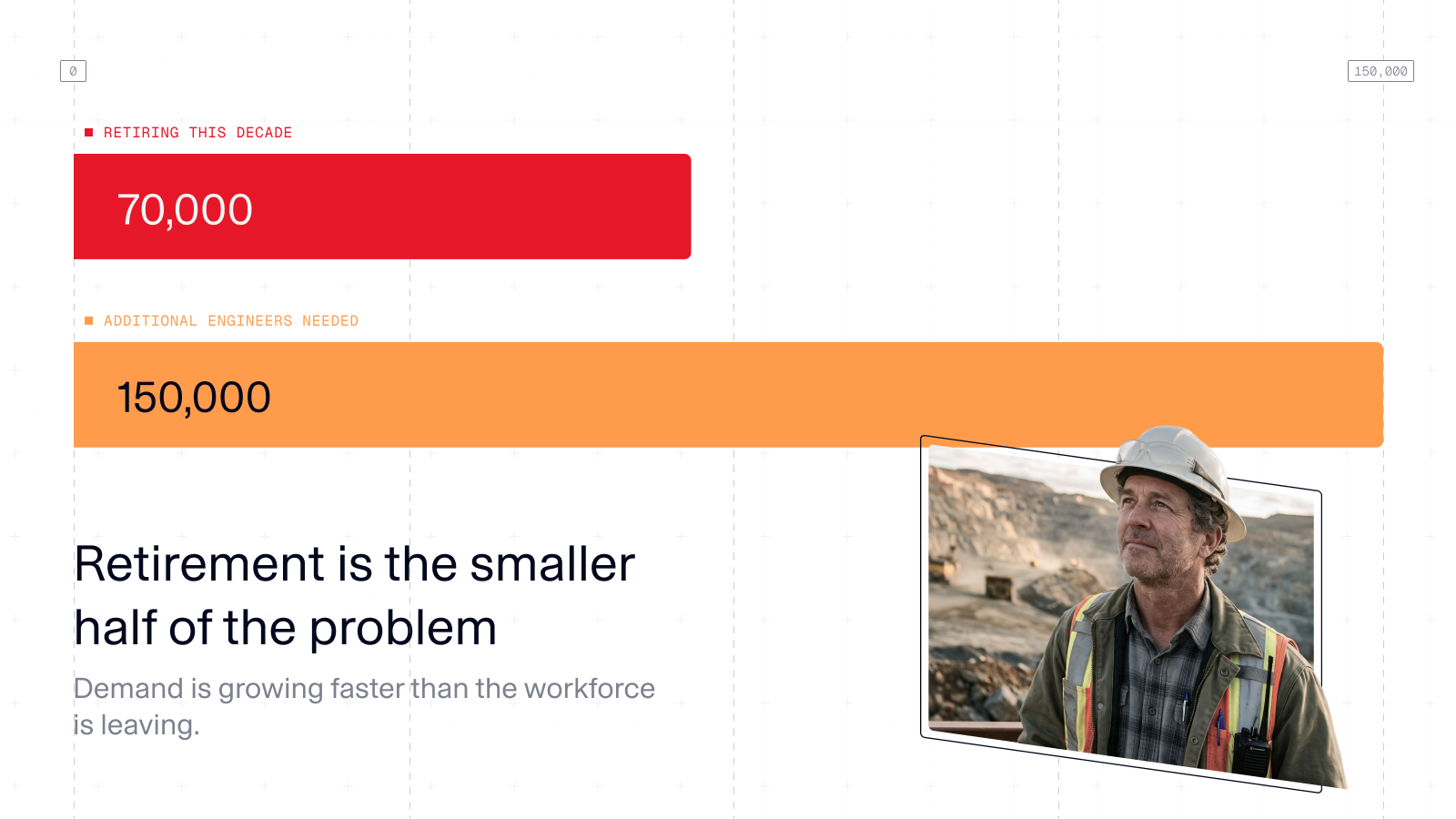
A generation of experience is walking out the door. Engineers Australia projected up to 68,000 retirements by 2026. Domestic engineering enrolments have been flat since 2014, and more than 60 percent of Australia's current engineering workforce was born overseas, making skilled migration the load-bearing element in a structure nobody designed that way. Meanwhile, sites are collecting more operational data than at any point in their history, and leaders kept describing the same stall. The work needed is apparent. The conviction to act on it is what is missing.
Just purchasing software doesn’t solve the problem. What software does is stop scarce senior judgment being spent on the parts of the job that do not need it: flying the route, sorting the images, working out which of ten thousand frames is worth a second look. The engineer still makes the call. With fewer qualified and available engineers, it’s vital to give them more tools to increase their output without adding headcount.
There is serious computer vision and AI work happening inside corporate innovation offices, and there is the work an asset manager or operations lead needs to do on the ground today. The gap between them is still wide, and people have stopped waiting for the innovation function to close it. They have started looking for their own answers.
Most conversations came back to one question: what can you do for me now?
Most of the people we spoke to came to solve a specific problem, and many arrived expecting the technology to just do the thing or tell them the thing. That expectation is fair enough. Nobody asks how a torque wrench works before picking one up. But when the answer comes back as a model score instead of an instruction, interest drops fast.
That shift matters for how we all talk about this category. AI by itself has become table stakes. What people care about is what happens after a detection: how does it reach the right person, can it trigger the right response, will it change what the operator does next. The feedback we heard repeatedly was that our booth stood out because we led with tangible use cases. Unleash Live gives operators sight of their assets, surfaces what matters, and transforms the systems they already run. The operator can evaluate the situation and make a data-driven decision.
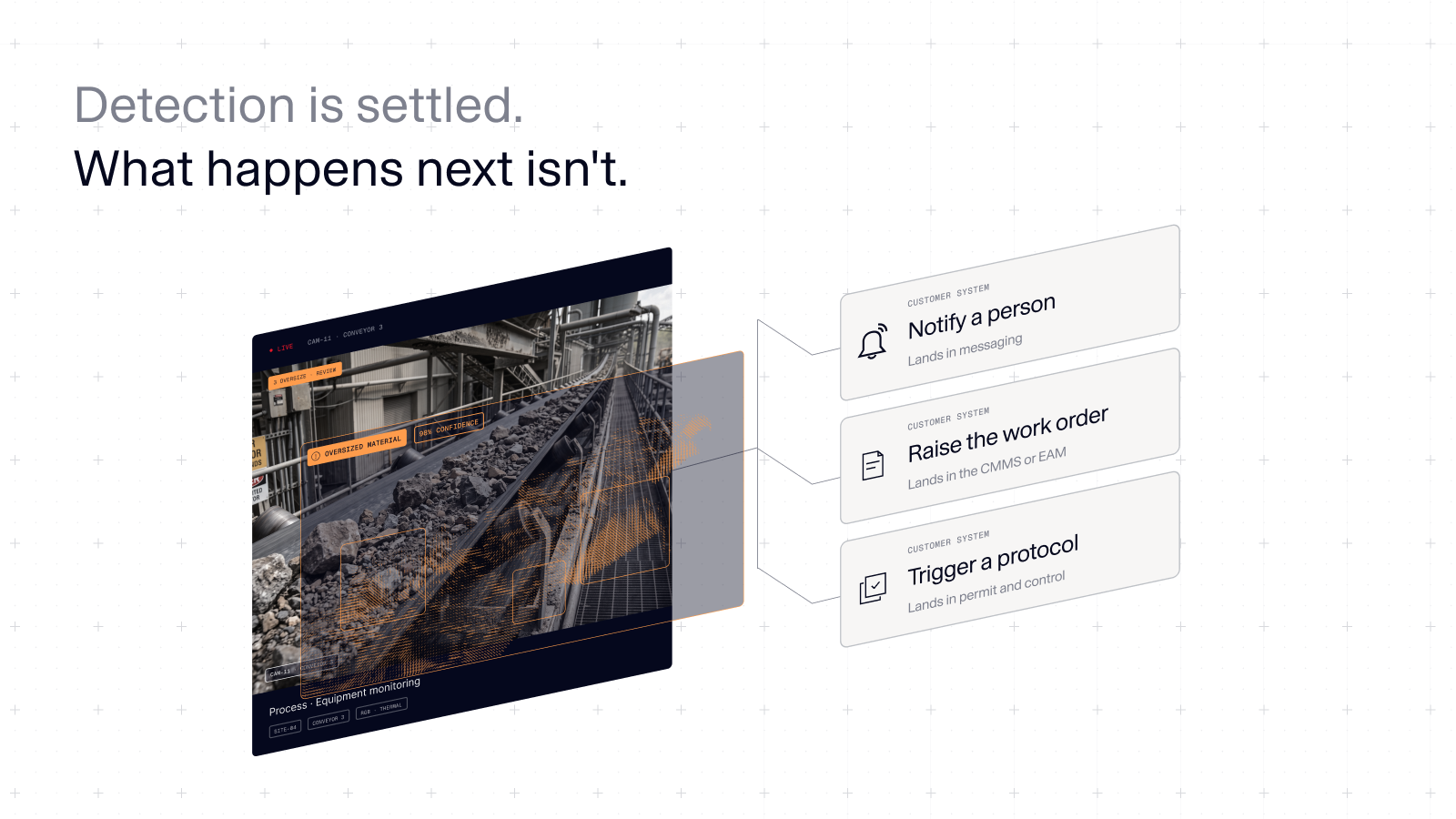
Detection is solved. Connecting that analysis to an automated workflow is the task. What people described ranged from an SMS when something is found through to a finding that triggers a stop-work protocol the operator controls. The common requirement was the ability to close the loop between what the camera sees and what the site does, without additional friction.
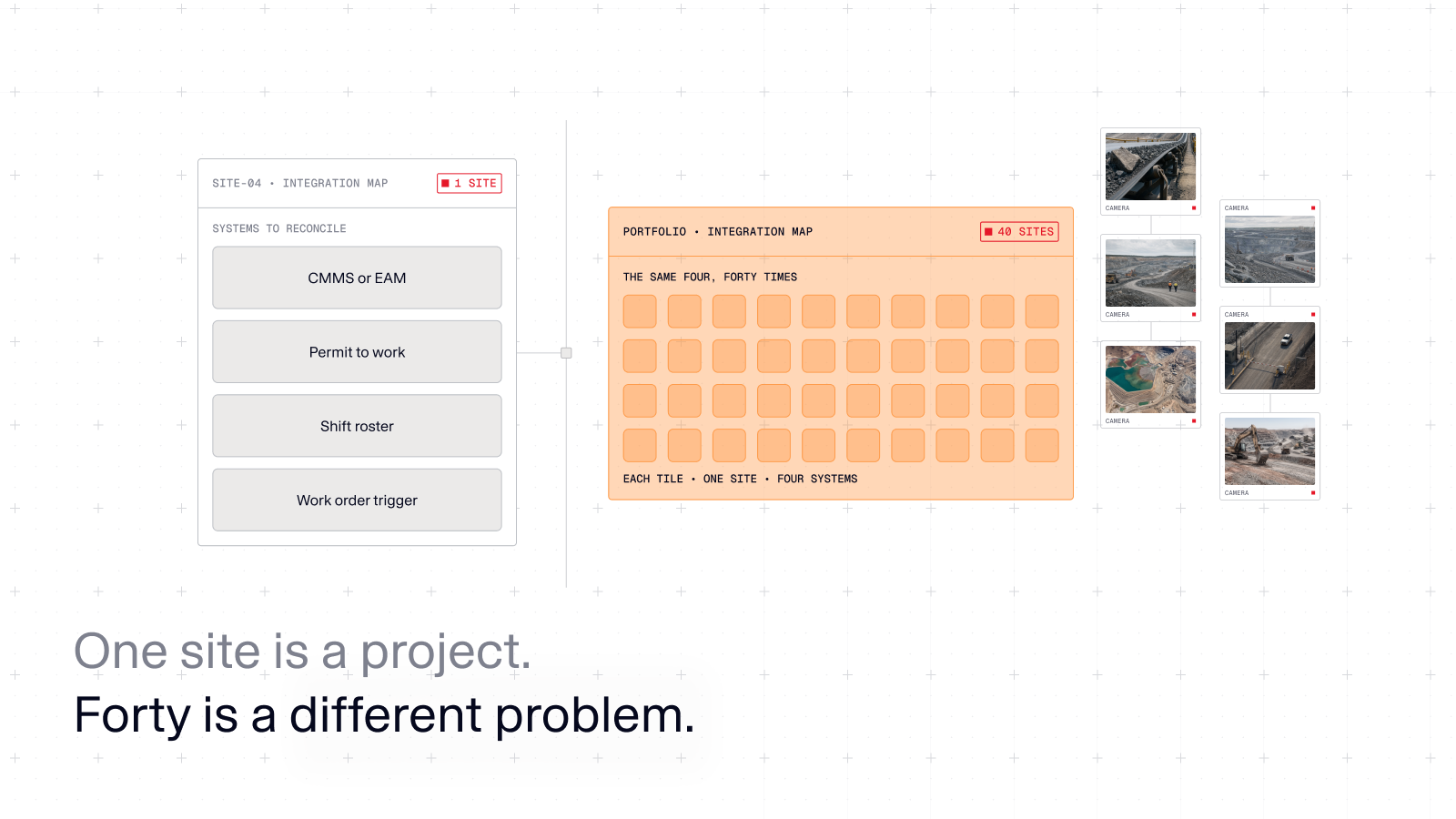
Routing a detection into a live workflow is work we do well, and on a single site we do it quickly. Going from one site to forty is a different problem. Each site has its own maintenance system, its own permit process, its own shift structure and its own view on what a detection should trigger, and the operator is carrying that reconciliation while still running the asset. This is the last piece of the puzzle for us.
What struck me most were the specific, unsolved problems people brought to us, most of them driven by production loss or safety exposure. A heavy manufacturer dealing with heat-driven expansion in metal on the line, which maps closely onto measurement-anomaly detection our team has worked on elsewhere. An operator inspecting single-span cable for defects, which is conductor inspection under another name and, if anything, easier given there is little to no sag to account for. Both were requests for an outcome, from people who had not yet found anyone able to deliver it.
Both use cases carry a number. An hour of unplanned downtime on a line, or a missed defect that becomes an outage, is already sitting in someone's operating budget. The value or cost of a tools-down event is where the conversation should start. Start with how to mitigate the issue.
One thing I did not hear enough of was where any of this data actually lives. On a floor full of mining and utility operators I expected sovereignty and residency to come up unprompted, and it mostly did not. That will change, and the operators asking the question early will have far less rework ahead of them than the ones who ask after the architecture is already set.
All of our conversations could be distilled to one approach: how can an operator use a video stream or an image to capture once and reuse the images for multiple things? For example, can you detect line sag, insulator corrosion and vegetation encroachment all at once? One capture, multiple stakeholders. This is scaled efficiency.
That is also the answer to the retirement problem I opened with. When a senior engineer looks at a particular pattern of corrosion on a particular asset class and decides it warrants a crew, the judgment currently lives in their head and leaves with them. Written into a detection standard that runs across every site, it stays. It will never carry everything the person knew, but it carries the part that repeats, and the alternative is losing all of it. Solving the specific problem in front of you and building a standard visual detection protocol across your sites are the same piece of work.
That is the market we are building for: operations running today, carrying real cost and safety exposure right now. Our thanks to the MAINSTREAM community, and to the team on the floor for two days of listening.
If you were at MAINSTREAM and want to walk through how this maps to your own assets, request a technical briefing.
Source: Workforce figures: Engineers Australia, July 2025

