![Hanno Blankenstein on the panel with Siemens and Deloitte, Melbourne. [alt="Photographs from the Siemens Ignite panel, with Hanno Blankenstein speaking"]](/media/imported/blog/unleash-live-blog-feature-siemens-97b4ac.png)
Why the buyer for industrial AI shifts from the asset to headquarters. Takeaways from Unleash Live's panel with Siemens at Siemens Ignite.
- computer-vision
- ai
- best-practices
- operations
- inspection
At Siemens' Ignite conference in Melbourne, Unleash Live joined a panel on the future of AI in industrial settings, the physical AI layer, alongside Peter Halliday, CEO, Siemens Australia, Matthias Rebellius, Member of the global Managing Board and the Siemens team and moderator Lars Weber of Siemens. As one of Siemens' Xcelerator ecosystem partners, Unleash Live was invited to speak to a question every infrastructure operator is asking right now: how do you take an AI use case from an idea to something an engineer will actually trust?
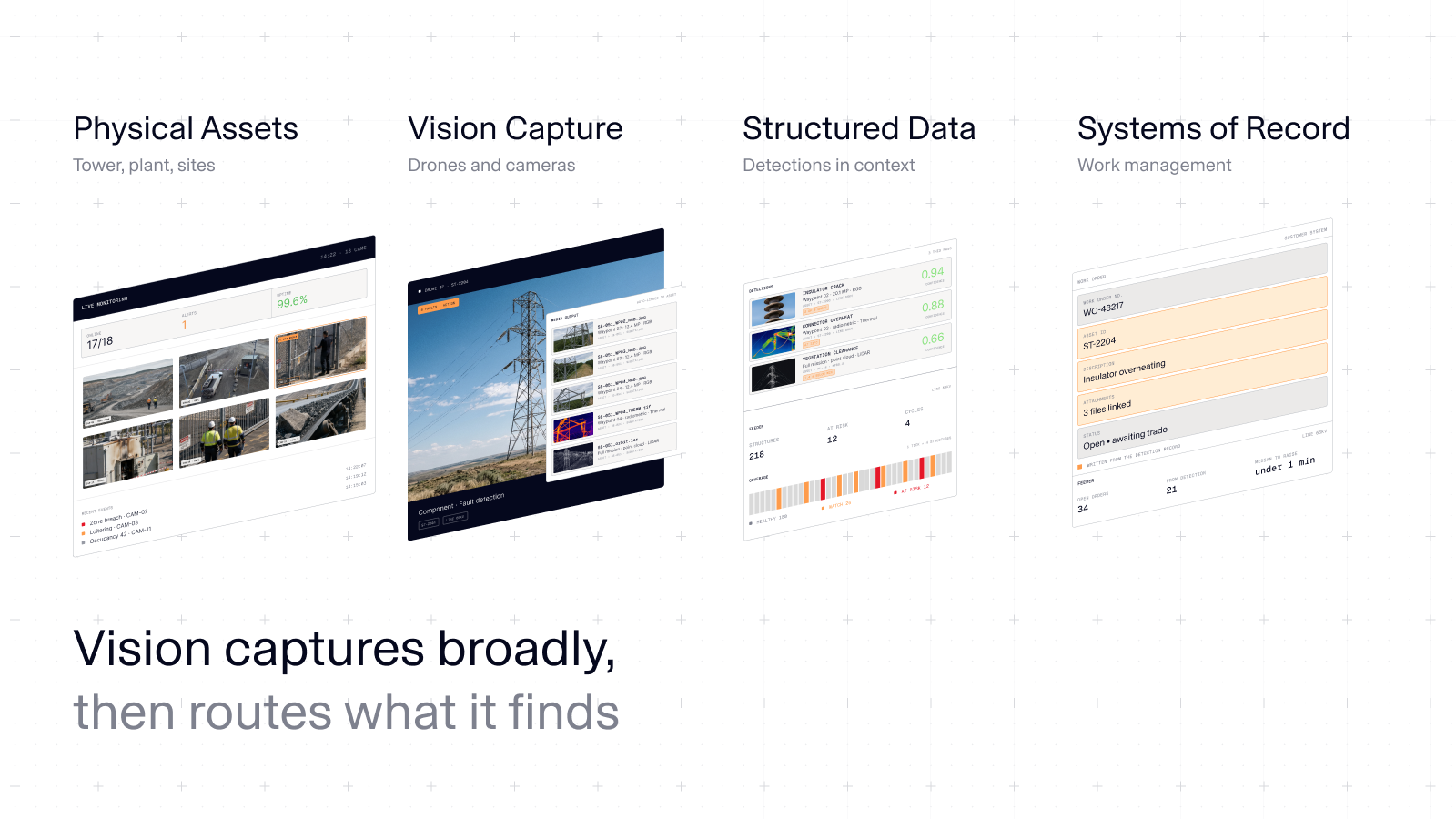
Hanno Blankenstein, CEO and Co-founder of Unleash Live, opened with the company's differentiation: Computer vision as a sensor layer that connects physical infrastructure to a data graph, and from there into the asset management systems and systems of record operators already run. Vision, he argued, is the most capable sensor available today. Because it captures so much at once, it can be analyzed, categorized, segmented, and turned into decisions in ways a single-purpose sensor cannot, and over time it will replace much of what used to require a range of narrower, single-purpose sensors to achieve the same result.
Raw sensing is only half the story. The trust question comes from connecting that data back into systems of record and layering AI analytics on top of it, and trust is the real obstacle right now. AI is currently an easy target for criticism: an answer that is 80 percent right gets picked apart, and that skepticism is fair when the buyer is an engineer trained to work from math and physics, not probability.
The way through, Hanno argued, is to start where the trust already exists. Siemens has spent over 150 years automating and running process engineering. Overlay AI on processes that are already understood and instrumented, and the accuracy bar moves from "mostly right" to consistently correct, every time. That's process engineering. Matthias, had already flagged the next step: once that trust is established at the process level, AI analytics stops being about one process at a time and starts optimizing an entire operation for productivity and safety simultaneously. That shift changes who's buying. The customer moves from someone rolling out a physical inspection or monitoring tool to someone optimizing productivity across the operation, and that buyer usually sits in headquarters or a data analytics function, not on the asset itself.
Siemens' own contribution to the panel picked up the same thread from the manufacturer's side: trusted data as the condition for any AI use case to succeed. Herman van der Merwe, Siemens presales manager for AI, pointed to Siemens' domain expertise and automation history as the foundation, with ecosystem partners like Unleash Live contributing the field data and AI analytics that put that history to work.
Looking five years out, Hanno connected the discussion to a debate playing out across the AI industry: that the internet's text data is close to exhausted as a training resource for large language models. Industrial infrastructure, by contrast, is barely instrumented at all. A mine, an engine, a power plant carries far more sensor surface than most environments, and most of it isn't connected or analyzed today. Over the next five years, he expects that surface to get wired up, with AI systems working across it in the background rather than through someone actively watching a dashboard. Mundane monitoring work goes away. What's left for people is the higher-value decision, made faster and with more of the operation visible at once.
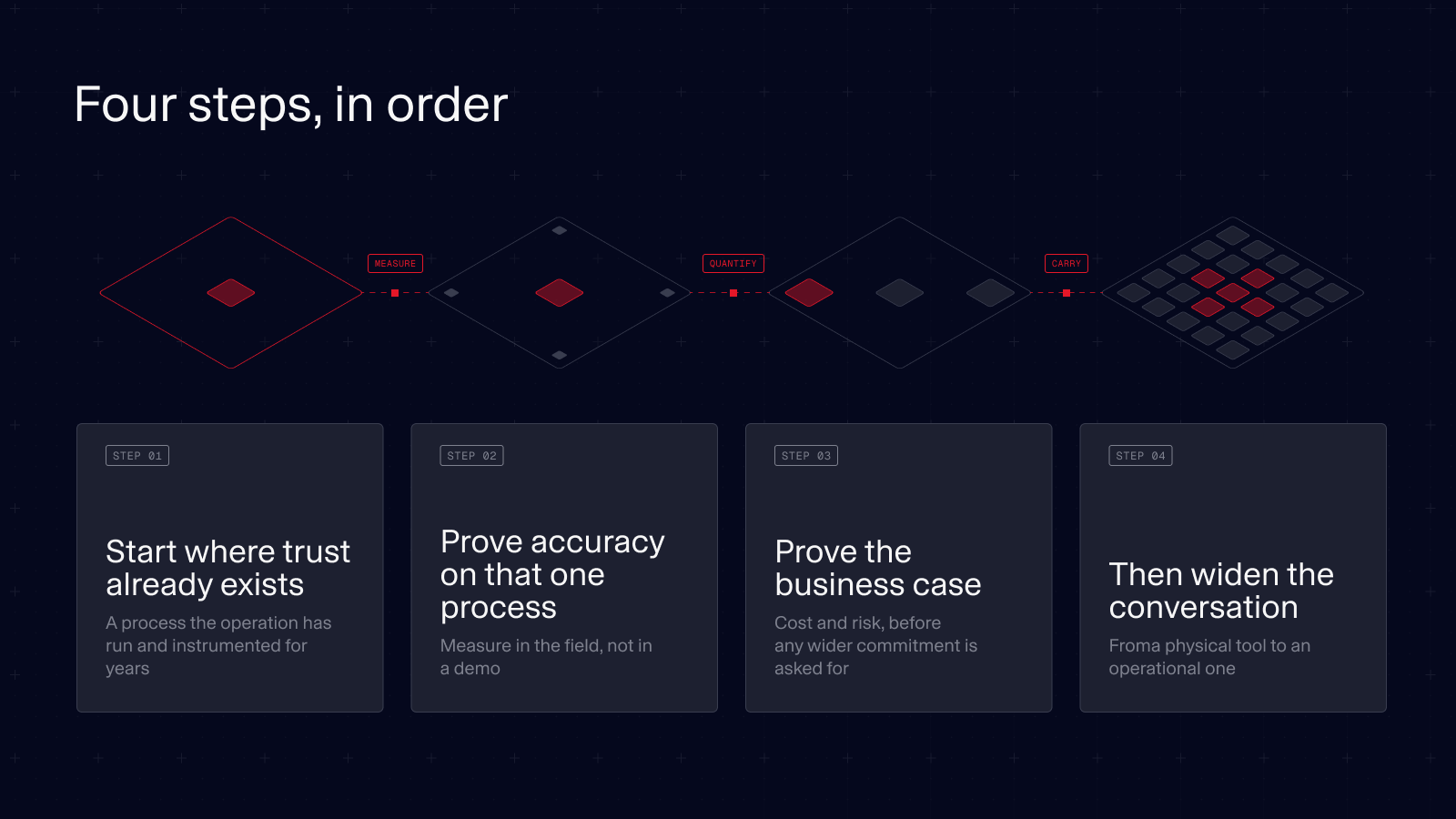
For infrastructure operators building their own AI use cases, the panel's throughline was practical: start where trust already exists, prove accuracy on a defined process, prove the business case, and only then scale the buyer conversation from a physical tool to an operational one, using evidence gathered in the field.
Request a technical briefing to talk through where that starting point might be for your own operation.

